
SPEED TC Spotlight: James Clay, ”No, More Mr. Nice Guy!”
My latest feature for SPEEDtv.com on SPEED Touring Car racer and owner of BimmerWorld, James Clay.
http://www.speedtv.com/articles/auto/scca/30792/
IRL 2001: Curtain Call on a 16 Year Career
The 2000 season had been a tough one on me. With the onset of the 2001 season, a call from my old friend Sam Schmidt to join his new Sam Schmidt Motorsports (SSM) IRL team seemed like a fitting end to my tenure as a full-time racing professional. I’d been on the road in one series or another since 1986, and despite a life’s worth of dreams that’d been realized, the grind of always being gone, always missing home, and longing for a normal life had told me it was time to enjoy one last hurrah. Sam’s team, run by LP Racing, the team I’d worked for in 1999, was an easy and welcoming home for me to rejoin.
Larry Nash, owner of LP, was always a favorite of mine—an absolute gentleman, soft spoken, and someone with a history in Indycars that started back in the ’70’s. For me, the combination of Larry’s character, experience, and history is one I’ll always make time for. I’d worked for Larry in 1999, and Larry and I shared a simple, highly effective engineering and managerial relationship. His old school skills and my new school skills blended nicely.

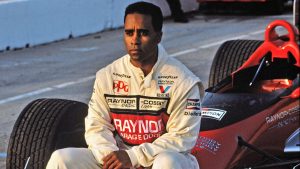
Carrying over from 2000 into Sam’s team was my driver Davey Hamilton. I still chuckle when I think of the first time Davey and I saw each other inside the SSM trailer–it was like two castaways amazed to see each other had made it off a sinking ship intact, alive, and washed up on the same sunny and bountiful island. SSM was an altogether different, freeing world for the two of us after 2000. Sadly, Davey’s career as an Indycar driver wouldn’t survive the season.
Using the venerable, proven Dallara-Oldsmobile package, we’d started out with Ilmor-built engines. The first few races were unremarkable, not bad, but nothing special.

The only scary moment was when we got caught up in the middle of a fiery crash involving a number of cars. Our car was banged up a bit, but the fireball was just a scary visual–not something that hurt Davey (I do think his helmet was a bit toasty, though….) Casey Mears spinning overhead on Davey’s roll hoop was more of a concern, but that was an easy fix. Horsepower, as we’d find out, wasn’t nearly as easy to fix.


Front running Penske Racing and Kelley Racing had used the Ilmor’s to great effect, and we’d expected the same fortunes. That reality was soon dispelled as the timesheets over the first few tests and races always found our SSM car to be as many as 5mph down on the Kelley cars. Yes, engineering resources at Kelley were greater than ours, but at power tracks, where we’d pushed the outer limits of low downforce and minimal tire friction, we were still lacking mightily on peak horsepower. The Penske cars were a further jump ahead in the limited races they did in 2001. It was only then, and after a lot of Sam’s pushing of the Ilmor group, that options for an uprated version of engine was made available. Or should I say, available, but not for free.
The price tag for that uprated engine configuration came with a minimum buy-in of $250,000. The real deal, the “equal with Kelly” version was a $500,000 investment. Now, to the outside world that might not sound out of the ordinary; racing engine manufacturers have long charged different rates for different specifications of their engines. In the IRL, though, the rules didn’t condone such a “pay to play” pricing convention. Indeed, and with the heavy emphasis placed on engine and chassis rules that didn’t allow exclusivity, Ilmor had exploited some of the softly worded text on this topic. Their “Kelley Spec” wasn’t exclusive, but did cost a whole lot more than their regular customer engines.

The IRL had been built on engine builders like Speedway, NAC, Brayton, and a few others that refused to offer an advantage to one customer over the other, or charge more for a different spec. Companies like Speedway, winners of IRL championships with Hemelgarn and Buddy Lazier, and two more with Panther Racing and Sam Hornish, did all their own development, and passed that cost onto their customers equally when an engine was being rebuilt. A routine $25K rebuild would sometime be $30K-$35K, but that was all. Ilmor had gone a different route, saying that if you wanted to seed their development cost pool for between $250K-$500K, you’d get normal rebuild costs and the extra parts or tuning info they’d come up with as a part of your lump sum payment. They claimed Penske had sewn over $1mil into this pool and Kelley another $500K, so for a new team like ours, it just wasn’t going to happen.

It finally took a threat by Sam of changing to Comptech engines for Ilmor to relent; a spare Ilmor-owned engine was pulled from the Kelley garages at Indy for us to qualify and race with. Our times for the month of May weren’t anything special, and at a track that demands every ounce of horsepower available, we were a few pounds short. The folks from YearOne restoration, a huge muscle car restoration company, spent a good part of May with us, sending back pictures and reports to their website–their outsider perspective on Indycar racing was funny at times, but when it came to our complaints about horsepower, they offered to take our engine and return it in full NHRA spec! We’d gone far enough into the month, harping at Ilmor the entire way to help us somehow, mind you, that when they finally did help us, we had almost no time left to get in any running to properly balance the car to the new power and resulting speed characteristics.
We qualified 26th of 33, and hoped that with some much needed time to perfect the car on Carb Day, we might have the #99 chassis in a more competitive state to work with the better engine. Carb Day did go well, and while we never expected to impress, we came away confident that we could run close to the top ten. Larry and I had come up with a pretty solid game plan; with the excellent fuel mileage the Ilmor delivered, our goal was to save fuel and stretch our pitstops, hoping for an opportune yellow flag to leap forward. In the absence of raw speed, this is a fairly common alternative race strategy.
This plan had been working to perfection—we jumped into the high teens before too long, and then marched even further forward. We’d made out way better than we’d expected, climbing up to 7th with 20 laps left. Keeping an eye on telemetry, I’d seen that some odd things were starting to happen with the Ilmor with the checkered flag almost in sight. Our voltage was freaking out, and our water temps also started to spike. Something was certainly trying to end our day prematurely. My 2000 Indy 500 faltered when Davey had almost terminal electrical and alternator problems, causing us to finsih, albeit 50+ laps behind, so I hoped his mojo hadn’t gone sour on him again.
Turns out the water pump had begun to fail, and some high pressure water had been spewing on some of the electronics. No electronics issues, but as our Ilmor had tried to convert itself to steam power, Davey called in and said our day was done., motor broken.
%&*!!^!$&*%! Knowing this was my last ‘500, I was saddened that out pending 7th place would have been my best result.
My teams had led Indy, qualified on the front row, and barring Eliseo spinning alone in ‘99 to be the first car out, my drivers were always in for a good fight. Our 23rd finishing place was a bittersweet end for me, having been so close to a hard fought finish. My percentage of our $280,325 payday did make things a little easier…
Despite all this, and with only a few minutes of the race left, I packed up and watched Helio Castroneves whom I’d worked with in CART take his first win at Indy. With the race over, the entire SSM team did as teams have done forever and walked out to pitlane to applaud the incoming cars. Helio was almost out of his seat as he passed by, and a number of us reached over to give him a high five on the way past. He made no effort to hide the tears of joy on his way to victory circle.
As the last car passed, I made the long walk back to pits down pitlane from our pit spot, and soaked in the energy and ambiance that makes Indy my most hallowed of racing grounds. Just as I got close to make the left to the garages, I saw Helio and his crew climbing the trackside fence and thought how cool it was to see such a raw display of emotion being shown for all the fans. With traditions being such a big deal at Indy, I guess Helio’s break from tradition by climbing the fence didn’t sit well with all. The Monday morning Indianapolis Star had a shot on the cover of Helio in mid-climb on it—half of the fans were clapping. The other half were flipping him off…
With a fresh engine in place, albeit not the best-spec Ilmor wed had for the 500, the Texas night race would prove to be the turning point for our team. With an underwhelming powerplant back in the car, we only managed to qualify 22nd. In a 24 car field, the need for a change in engine builders was painfully obvious.
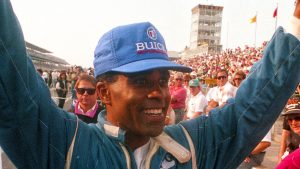
Concerns for power soon gave way for concerns of the life of our driver Davey Hamilton. Texas has always been the fastest and wildest track on the IRL calendar, and under the lights in the early Texas Summer, vision is critical. On lap 71, Jeret Schroeder blew the engine in his car at the apex of Turn 1 and Turn 2; speeds at this section are usually North of 215mph. Davey, the next car on the scene, was initially undisturbed by the flood of hot oil, had no place left to go when the spinning Schroeder slid up the track on the exit of T2 backwards. Davey’s wheels interlocked with Jeret’s, and Davey’s Dallara was launched over the concrete barrier into one of the dozens of steel poles that support the protective steel crowd barrier cables.

The Dallara, launched upwards and sideways without scrubbing much speed off, broadsided the 1′ diameter steel pole just forward of the dash bulkhead, breaking the front of the chassis off at the mid-thigh area.
Watching the race from pitlane sitting on the timing stand that faces the main grandstands, it took a second to correlate the disturbed yells from the 100,00 fans in front of me to the sudden loss of telemetry data on our team’s screens. Seeing that most of the fans in front of me were point behind the pits over towards turn 2, I knew that whatever happened to Davey wasn’t good. It was then that I heard the IRL officials call out a variety of emergency response commands that were different than what I usually heard in the event of an accident. Whatever code words they used, I knew they weren’t good code words.
We’d soon learn that if Davey had just enjoyed any form of luck, it was that his 200mph impact into the steel pole was somewhat a glancing blow. Instead of it being a pure side impact, he hit at about 45 degrees, with his momentum pulling the car slightly back and away from the pole (towards turn 3.)

This miracle meant that while Davey’s legs were almost entirely exposed to impact the pole once the chassis had broken away, the car had continued away from the pole somewhat, leaving his left leg just below the calf to impact the pole. In that whipping motion, his right ankle and foot were also free to impact the pole. This whole ordeal left Davey with two crushed feet, some lost toes, parts missing from his feet, and a lot of carbon fiber shards embedded in his lower extremities. The steel cables had caught and ripped everything they could off the car, and the pole, showing signs of the initial impact, had been bent about 3″ to the left like a horseshoe where the car hit. For steel, that’s a lot.
All of this happened in less that a quarter of a second. The Delphi impact recorder said his impact with the pole was over 100g’s. The impact recorder was attached to the front part of the chassis, and emerged with some damage too. Not much on the car forward of the fuel tank was worth keeping. Not much from the dash forward was even recognizable. It’s an over-sued expression, but in this case, the car really did look like it had been hit by a bomb. With replays of the crash now running on everyone’s monitors, all of our crew turned away once they saw Davey hit for the first time.
There’s no class to learn how to deal with things like this. Some of the newer crew members just sat on the pitwall in solitude, unsure how to react. Others like Larry Nash and I knew the sooner we could get home, the sooner we could put this brutal weekend behind us.
Davey’s condition wasn’t immediately released, but I did grill the tow truck driver that had returned the car to us as to Davey’s state. He said he was unconscious, and his lower legs were obviously in horrible shape, but that he seemed to be in stable condition when he was airlifted out. It didn’t make the job of wiping a few pints of Davey’s blood off the car any easier, but it was helpful to know our friend was going to hopefully survive his injuries.
With that nightmare over for the time being, a new race with a new driver was the only thing we had to move forward. It wasn’t easy.
Alex Barron, Richie Hearn, Anthony Lazarro, and Jacques Lazier all substituted for Davey from Pikes Peak onwards. Hearn was in the car for Pikes Peak a week after Texas. Davey’s mangled car was still in the upper portion of the trailer, and I had the unenviable job of climbing up there to retrieve a few sundry parts and pieces for the mechanics as they hurriedly build up our new car. I didn’t mind doing it–they were far too busy to spare someone, even for five minutes, to stray from the new car. What I did mind was seeing the reminders of how violent the crash was. As if mopping up Davey’s blood from the car immediately after it was retuned by the wrecker at Texas wasn’t bad enough, staring at this solemn hulk pushed to the far extents of the trailer deck was eerie at best.
While I was up there, someone handed me a disposable camera and asked me to shoot some pictures for our insurance carriers. Geez. Not fun.
The Texas crash was nothing new to any of the veterans on our team, but most of us had only ever dealt with the visuals of twisted cars, not the visuals of a driver being twisted up in a car. With a crowd quickly gathering to look at the smashed cars that night, we pulled all our team together to clean up the car, load it into the trailer ASAP, and get the heck out of there. Insurance pictures or pulling they salvageable parts from the car weren’t even a consideration.

Richie did an admirable job to get up to speed in the car on the 1mi oval and finished 9th, but nothing about the event seemed to be more memorable than we’d just encountered at Texas. We were auditioning full-season replacements for Davey, and although I was mightily impressed by Hearn’s 9th place, Sam opted to try Jacques Lazier at the next round at the series first Visit to the .75mi Richmond International Raceway.

Lazier quickly proved Sam to be a genius. Jaques simply clicked with the team right away. His debut race for us earned his first and the team’s first pole position. With our thoughts still on Davey, Jaques pole position was dedicated to Davey and we all felt a little bit better about our season. Lazier was taken out by Sarah Fisher barely after the race got underway, so our result didn’t match the promise shown.
Two races later, Jaques earned the team’s best result of the year with podium at the 1.3 mile Nashville Speedway. He earned the third place spot, but unfortunately, he never made it to the podium.
Ever heard of someone finishing 3rd and destroying the car on the cool down lap? Yeah, me neither until Nashville…
We’d been running in the top ten for the second half of the race, After a few pitstop errors in the first half cost us valuable track positions. Not wanting to temp fate, we’d decided keep the long-life Firestone’s on the car and only add fuel on our next to last stop. This moved us up a few spots during that stop, and had us closer to the front. with the laps winding down, and few fortuitous cautions to help stretch our mileage, we were faced with only needing a splash of fuel to make it to the end. Unlike most other teams, our tires were worn out. On a big oval like Nashville, grip from the tires isn’t a big factor—the cars have plenty of downforce to keep the cars glued to the track.
Regardless, new tires to offer a brief spell of improved grip that can help to pull off some daring passes that wouldn’t normally be possible during a restart. All the top teams opted for fresh rubber, but wanting to gamble, we decided to got for a timed three second fuel stop (about 9 gallons) to get us to the end, but to skip the tire change that would take as much as six seconds. With the other team fueling for as long as it took to change tires, we ended up getting out three seconds faster than most. This shot us up into 3rd place, the position we held to the checkered flag.
As we all jumped and shouted in excitement, Jaques radioed in to say “I’m OK.”
“I’m OK?”
What the h*ll kind of “Hey I just had the best Indycar finish of my life” kind of radio call is that?
Turns out we were at fault for the accident. The car was also a write off; the chassis had been punctured by the wheel impacting against the turn 2 wall.
What happened? Well, it seems that we forgot to remind Jaques of a certain little fact on his last two pitstops. While the tires were plenty capable of providing grip for this extended run, the thin construction of the tires wouldn’t allow repeated burnouts from leaving the pits. With them suffering a burnout when they were first installed, a second burnout in our second to last stop, and yet another burnout when Jaques sped away from our quick timed stop at the end of the race, by lap 200, he was riding on rice paper.
Rounding turn one at the end of the race, but still at a high rate of speed, his right rear tire had given up and was worn through the tread. Poof. No air, no control, and no more Indycar. I wasn’t surprised to learn the engineering staff wouldn’t be getting a cut of the $73,000 we’d earned in prize money. It was being put into building a new car…

Jaques did one more race for us, finishing 12th at Kentucky before he was able to use his fortunes in his short spell with SSM to be drafted into the powerful Menard’s team when Greg Ray was fired. Lazier soon won his first race for Menard, and although I’d wish he’d stayed with us to possibly win his first race in our car, I was glad to see his years of struggling to make it to the top finally pay off.
Alex Barron, recently orphaned by Penske in CART, tired out in the seat at the next race at Gateway in St. Louis. It wasn’t a positive experience. I’d seen Alex tear things up in Toyota Atlantic in his debut season then followed by mixed fortunes in CART with either lesser teams or Penske when they were in a freefall. By the time he was drafted into Sam’s team, it had been a while since Alex had been in a healthy environment.

Not that we didn’t offer a good opportunity, but with no testing and the heightened expectations for an ex-Penske man to be bang-on the pace, Alex spent the weekend just trying to get comfortable. That says nothing for his talent—he’s absolutely one of the best, but in a weekend like this where he was thrown in at the deep end, few, If any, would have come out with a positive result. Barron, doing his first hot pit stop in a while, was waved out a touch early by our Chief Mechanic, and moved directly into the far lane in the path of an incoming car. The crash, scary as heck with Alex’s car partially flipping the other driver’s car up in the air, ended both teams weekend on lap 41 of 200.
Alex, pissed off while changing and gathering his belongings back at the trailer, looked like he just got duped into a weekend he wished he’d never experienced. We shared a few pleasantries before he left without speaking to the rest of the team, and it seemed all too apparent that he wouldn’t be asked back. Sometimes, opportunity met with skill doesn’t always result in the expected outcome. Thankfully, Alex signed with Blair Racing for 2002, won a race, and was soon winning races for other IRL teams. Richie Hearn was back in for the next race, finishing 6th, proving again that his talent deserved another shot with a top team.
Anthony Lazarro drove for us in the final race of the year; I’d been a huge fan of his talents in Formula Atlantic and Formula Ford 2000, and had no doubt of his abilities to succeed in the IRL. Those races, all change and adjustment for SSM, rounded out a harsh year for us, harder for some of our drivers, but also brought some great opportunities for a couple of the other pilots. We’d switched to Comptech power, finally, for Nashville, and it’s no mistake that the pace of Jaques and Ritchie was indeed aided by the equal and uncomplicated mastery of engine the boys at Comptech delivered.
They were also a pleasure to deal with. What a concept. I’d known Doug Peterson of Comptech for a few years, and knew his company would be a huge upgrade. It’s nice when things like that work out as they should, isn’t it!
Davey has gotten back behind the wheel since his crash in 2001, serving as the driver of the IRL 2-seater at every track. His options as a regular Indycar driver are long past—he carries the obvious results of his crash, not by visible scar, but by his stilted walk. Davey lost a number of inches from his left leg, and like many Indy 500 driver before him, now walks with the unmistakable lilt of the “Indy Shuffle.” That “Indy Shuffle,” a term coined well before I was born, is a point of pride for some that were able to continue. For Davey, the sting of the accident didn’t come with a fairy tale ending.
I’d met some interesting characters at SSM during the season–6′8″ mechanic Dale Fife, now a top mechanic at Dale Coyne’s Champcar team, and Paul Taylor, Chief Mechanic on the winning Krohn Daytona Prototype team. Sam Schmidt and I keep in touch, and I ran Sam Schmidt Paralysis Foundation logos on my factory Subaru NASA 25hr Endurance car last year. Tony Stewart was cool enough to pitch in money for every lap we completed, making a final donation to Sam’s foundation of $2,000.
It might have been my last season on the tour, and I was highly burned out at the end of it, but I’m thankful for deciding to call it a day at the end of the season. It was the right time, and under the right circumstances. Once I’d put that chapter of my life behind me, all the things I’d always longed for came to fruition; a normal job in the Biotech industry came calling, I soon met the woman that’s become my wife, I finished college at the University of San Francisco.
These things might not sound like accomplishments, but for someone that spent his life on the road, something as mundane as having a dog was impossible without leaving a week’s worth of food out. Same goes for having and holding a relationship, a normal job, a normal life, or the better things one can find away from a race track.
When I walked away from my full-time career of 16 years, I’d achieved all the major goals I’d set for myself as a young teen. I’d worked in CART, the IRL, IMSA, Indy Lights, Formula Atlantic, competed in five Indy 500’s, stood on the Black Rock desert with Craig Breedlove and his Spirit of America, won countless races at every level, visited most racing tracks I’d ever wanted to, worked with dozens of characters, learned from fantastic mentors, and worked my way up from a 16yr old ‘gofer’ in the SCCA Pro Super Vee series to an Indycar Team Manager. With those dreams satisfied, I’m rather enjoying my new dreams of family, marriage, and enjoying racing at my own pace.
Not a bad life, eh?
Stories on Davey’s progress: 1 & 2
Driver Coaching: Andy Pilgrim & Max+Max
I had one of the more enjoyable times last year while working with the Cadillac World Challenge GT drivers. Andy Pilgrim, Max Angelelli, and Max Papis are all big names and wildly successful, but they are also hungry enough to know that no matter how many trophies or championships they might have amassed, the desire to grow and improve their craft should never grow stale or stall out.

As my commitments or schedule allow, I’ll continue to work with the drivers to help them deliver another manufacturer’s and driver’s championship for GM.
2005 World Challenge GT Champ Andy Pilgrim shared some friendly words about our working together:
“Whether I’m working with Marshall or not, I’ll seek him out and have him take a look at my data or racing lines. The way I see it, you’re never too quick or too old to learn and Marshall really knows his stuff.”
Andy Pilgrim
Team Cadillac
Team Management: Building a new DP team in 2005
One of the greatest challenges I faced in 2005 was helping to establish the new CB Motorsports Daytona Prototype team. In addition to engineering the car, the hardest aspect of the project was to groom and teach Bingham’s business manager how to run a racing team. Building the team infrastructure in under a month—defining crew roles, pit lane duties, event schedules, operational documents, and about 50 other items all needed to be implemented ASAP.
With the deal coming together so late, our first event, the California Speedway event in April, was a long weekend of very little sleep. That’s not a complaint–just a reality. Between staying up until 3-4am each night in the week preceding the event and during the event creating the aforementioned infrastructure, making Microsoft PowerPoint presentations for the crew.

With many of them new to GrandAm, the litany of rules, procedures, and policies that had to be memorized was vital. The hectic but controlled pace of our debut didn’t end when our day at the track was done— it just meant it was time to scour the local Fontana CompUSA at closing time to find laptops best suited for data acquisition, buy matching pants for the crew, and various other items that were necessary for an impressive showing on and off the track. With all of this in mind, I’m quite proud of debuting with a very respectable 14th starting place and a finish in 13th place.
We team went from strength to strength after Fontana, but the investment of time, energy, and expertise to launch a brand new professional sportscar team in under a month will stand as one my most rewarding team management accomplishments.
A kind note from Chris Bingham:
“Marshall has been instrumental in the success of our team. Since he joined us the energy level and enthusiasm he has shown has been beyond all expectations. Maintaining such a cool head and building cohesion with a new team on a new car has been admirable. The dedication to the teams success and effort in reaching that success has been on par with many team owners I have spent time with. Marshall filled many roles for our team, often beyond those that were asked, and did so with a unique and positive manner. I am grateful to have the opportunity to work with him and look forward to future successes, in no small doubt thanks to his help.”
Chris Bingham
Owner/Driver CB Motorsports
Grand Am Daytona Prototype Team #15

Indy Pro Series: 2005 Indy Freedom 100
I’d known Taylor Fletcher, owner/driver of the Bullet Team Indy Pro Series (IPS) effort through former Indycar friends and co-workers. They’d always mentioned him as an extremely good guy, if not always scraping together his last few dollars to go racing. On an amateur racing level, saving loose change in a jar to go racing is nothing new; saving money to do Pro Racing by this method always leaves a lot to be desired.
With so many different hands and levels of skill running across the car in the one-off races he’d done since 2003, Taylor presented me with a car that was closer to a jalopy than an Indycar. A cracked gearbox, and engine oil filter that revealed portions of the oil pressure tension spring it tried to digest, numerous stripped or missing bolts, a dead battery, fuel that had been sitting in the tank for 9 months, and about 4 dozen other items on a “to do” list were documented for correction prior to running.
For the one day official test, running was meant to be held from 9am-12pm, and 1pm-5pm. With the massive list of deficiencies to overcome, and only one day prior to the test to accomplish all the preparation necessary, the car wasn’t finished until 3:15pm on the test day.
Set apart from a distinguished amateur career, Taylor had never run faster than 178mph at Indy and had never placed higher than 12th in any of the six IPS races he’d contested. In reality, Taylor was known amongst the Indy caring circles as a darned nice guy, but not someone to be overly concerned about on the track. It was my job to turn his team around and change that.
When we did make it out to pitlane, the fastest car had run a time of 47.3 seconds, or roughly 190mph. Because Taylor hadn’t driven for almost 9 months, and knowing how deadly and unforgiving Indy can be, I setup Taylor’s car to have A LOT of downforce to start. Impressive speed was of little interest for me to begin with; Taylor needed to drive a car that was easy and comfortable while reacquainting himself with an IPS car at Indy.

As I began to peel downforce off the car, and with Taylor’s newfound confidence, I sent him out to mimic the other cars and look for a respectable lap speed in a tow—the entire race would be a drafting battle, so this was our next logical step in testing.

Taylor’s 48.2 second lap, albeit produced with a mighty tow from Marco Andretti, was the fastest lap Taylor had ever done. Throughout our abbreviated test, he hadn’t blocked anybody, caused an accident, had anything fall off the car, or caused the least bit of embarrassment for anyone.
To Roger Bailey and Butch Meyer, the two main IPS officials, this seemed to be a minor miracle; they congratulated me repeatedly back in our garages as if I’d won a prize or something. Maybe earning the long missing respect for Taylor and his oft beleaguered IPS effort was indeed something to be prized.
With a positive and productive pre-event test behind us I spent the three weeks between the test and the start of the Freedom 100 reviewing the data from the car, and picked a few improvements to start with for opening practice. Our car was running flat out at the test, but we still needed to find 5+ mph. With the rules severely limiting aerodynamic changes, speed would have to be found by reducing downforce in any way possible, and by reducing friction between the tires and track.

The event started off with a bit of acrimony when our first practice session was cut short with preparation-related woes—we only had two modest practice sessions prior to Qualifying to make the most of the car, and these problems really hurt. While Indy is spread over three weeks, the Indy Pro Series event is compressed into two days. Not much time for delay or issues. With the first session a near-wash, it left the second practice as the only real opportunity to get Taylor up to speed.

Since qualifying is an exercise in testing the limits of a car, the session prior to qualifying is about simulating qualifying, and giving a driver an inkling of what to expect at the limit. We were forced to spend our second practice session working on what we should have been doing in the first session. Outright speed couldn’t be embraced, so we spent the session working on race setup.

Taylor managed to qualify 14th of 18 cars entered, and the general mood was not cheery back in our garage. It was a perfect opportunity for me to have the team dig into the car, and do a complete inspection of everything once again to prevent the issues of first practice to crop up in the race.

From his 14th starting place, I worked with Taylor to drive a solid and consistent race. Between Qualifying and the Race, I’d found some damper improvements and worked with his on board weight-jacker to improve the car. It resulted in a 0.4 second leap that catapulted him from 14th up into the main pack of cars fighting for a top finish.

At the conclusion of the Freedom 100, Taylor had moved up to 9th, his best-ever finishing position and having set his fastest-ever lap. As a team, everyone was proud to have salvaged a solid result from a tenuous start to the event. It’s amazing what a positive result and a new turn of speed can do for one’s demeanor!
It had been four years since I’d been to Indy, and the first time I’d been at Indy running anything other than an Indycar. The IPS series was very fun, and while I didn’t get the chance to bring the top 6 finish I’d wanted from this underdog effort, I seemed to be stopped by a number of friends and associates in the Indy/IPS world that recognized the minor miracle of helping Taylor to a top-ten finish.

My perfectionist’s mentality will always leave me trying to deal with the constraints of a small budget, small crew, or compromised effort, yet despite my high expectations for the 2005 Indy Pro Series Freedom 100, it was a welcome reward to have made a lot of out of very little, and to have gained recognition from my fellow competitors for my efforts.
IRL 2000: A Hard Year
I’m nothing if not straight forward about my experiences. As much as it might be tempting to paint a false coat of success and splendor on things, it doesn’t change reality.
For this little ditty, I can say that my time spent with TeamXtreme in the IRL was littered with the odd highlight, a bunch of lowlights, and left a bad enough taste in my mouth to consider quitting the game.
TeamXtreme, a Dallas-based effort, had shown great promise in its 1999 debut season. I also got to know a few of the crew during the season, and chatted frequently with my old friend Mark Wieda, the team’s engineer. I’d known Wieda for years since we were in Indy Lights, and he spoke highly of the team in the off season.
Plans for a two-car program were announced, with Indy Lights winner Airton Dare driving the second car. With the team on the move, my 1999 team without a program for 2000, and a young hotshoe in their fold, I accepted TeamXtreme’s offer to join as an engineer on the primary car belonging to John Hollansworth. The season started off with a two week stay in Orlando, finishing the cars and testing at the 1.0 mile Disneyland track. Initially, we only had one new GForce-Olds, and it looked like Dare would get the new car. I knew Airton was a better driver than Hollansworth, but this slight aimed at my side of the team seemed a bit iffy. Hollansworth, in his second year with the team, would be using the very old 1997-spec Dallara chassis, while Dare got the brand new 2000-spec GForce?
I’d quickly learn that shaky “behind the scenes” deals like this would become a daily routine. After applying a ton of pressure internally, a new GForce for John was delivered and underway to be prepared for testing. For reasons sill unclear, John was ditched after the first race for IRL veteran Davey Hamilton. That’s not a slam against Davey, but rather, another murky decision no one was told about.

Team owner shiftiness aside, the next season-long pleasure made itself known: relentless racism. Oh joy.
My father, a product of the Deep South, emerged with the ability to think for himself, and even tolerate the existence of non-white people. I’d (errantly) assumed working for a Texas-based team wouldn’t be too much of a tolerance or racism risk. Clearly, I forgot the “ass-u-me” rule I’d learned watching Benny Hill as a kid when selecting my choice of IRL teams for 2000.
Working in such a cloud of ignorance will also cloud the competitive environment; with so much time spent railing against every minority seen or imagined, large portions of the team failed to give a properly focused effort. With such a “good ole’ boy” culture within the team a Northern Californian like myself stood out like a fart in church. To complicate matters even more, my girlfriend at the time had the unfortunate distinction of being black.
Talk about a showstopper when she came to see me at the track for the first time.
It’s hard to forget that episode: she walked up to our garage stall and gave me a big kiss. One of the team owners, an ape at best, saw the impending kiss, and reached for the camera he had around his neck. I only noticed his actions as I opened my eyes after the kiss, saw him quickly snapping away at the two of us, and when I eyed him aggressively, he fumbled some bullsh*t answer like “oh, I, uh, just wanted to…..takeapictureofthehappycouple.” With him thinking I was satisfied with his hasty, hurried answer, he didn’t notice that I kept my eye on him as I walked away. When he mouthed to his fellow good ole’ boy next to him “can you imagine kissing a n*gger?” I wandered off to have a little heart to heart with the one non Cro-Magnon team owner (there were about six of them in total, I think, but only one that understood more than grunts.)

My discussion with him was pretty simple, but also foreshadowed a conversation I’d have with no less than three other team members that weekend. The message was simple: “I can’t change someone’s mind, but I sure as h*ll can change their ability to walk or continue breathing if they want to spout anymore of this inbred crap around me, my girlfriend, or anyone else of color.”
To my surprise, everyone I had that little exchange with seemed not only embarrassed, but wanted to repair whatever damage they’d done. One guy, who now, and to my mild displeasure, has won countless races as a member of the Ganassi IRL crew, lasted about two days of going cold turkey from his favorite vice of telling “n*gger jokes.” After he fell off his racist wagon, he just looked at me and said “hey man, I grew up with this, and I guess it ain’t going away. Don’t know what to tell you.” One of the other crew guys told me that that guy’s dad was a hall of fame racist, and made his son look like a failure in the sport of Negro hatred. I still feel sorry for the guy, and even more upset that his father, or any father, would ruin the spirit and soul of a young child with such venomous indoctrination.

OK, so the score so far is (I)R(L)acists 5, Marshall 1, but things would get better still. One of the crew guys on my car, an Ohio native, sheepishly told me that my girlfriend (whom he liked a lot, and though was very polite, apparently) was the first black person he’d ever had a conversation with. I told him he had to be lying. As he recounted, his high school was all white, and while he’d mumbled a few words to a black convenience store clerk or similar from time to time, he’d never truly conversed with a black person.
Wow.
I asked him how one gets to be 23 years old like him with never holding a discussion with someone that looks different than you. His only answer was “Try growing up on a farm in Ohio.”
Good point. I didn’t have a response for that one.
Indycar social experiment gone wrong aside, the rest of the season was marked with more underhanded ownership dealings, crew changes, and mixed fortunes. with the air so thick with B.S, I’d informed the team that I’d be working non-competing weekends with the first class Hylton Toyota Atlantic team, engineering one of their cars for fun. That endeavor managed to balance some of the IRL silliness, but barely so.
Indy was a tough event; the team had bought a third chassis and then rented it out to help fill the bank, so we ended up running all month with an extra degree of caution in mind. No spare car and no extra money will limit a team’s aggressiveness…

Davey had been running well in the race when alternator issues cropped up. We called him in and changed batteries, but after we’d killed our 3rd and final battery in a car that refused to charge, our race was seemingly over—we were 50+ laps down. We did cross the finish line, but our race ended long before the race was complete. If there was one moment during the month that stood out to me as cool, it was getting to meet and hang with Juan Montoya when he came by to chat with Airton. Very warm, funny, affable guy–I was an instant fan after watching him decimate the CART ranks. Other than meeting Montoya, the main thing I remember from the long month was that it seemed every time I walked onto pit lane, Nelly Furtado’s “I’m Like a Bird” song would come over the public address system. It was cute the first dozen times, but after a while, I was convinced someone up in a tower somewhere was messing with me.
Still hate that song today…
Like that song, though, the season did then fly by maintaining a high level of frustration, but a level I’d learned to cope with. I’ll save this for another story, but TeamXtreme’s owners had chosen to go with the unproven EFI data system, and we figured that these systems alone cost us numerous races, tests, and lost untold thousand in prize money from all the failures. The team sued EFI at the end of the season, and while I was on the receiving end of a lot of the problems caused by EFI’s products, I had to snicker at TeamXtreme’s valuing of saving a few bucks up front on an unproven system that would end up costing multiples of what the standard Pi system would have cost.

Airton Dare went on to win the rookie of the year in 2000, and to drive for A.J. Foyt, winning at Kentucky in 2002. Davey Hamilton would be a surprising late addition to my 2001 IRL team.
Airton, like every other Brazilian I’ve worked with, was really funny, a little twisted, and bloody fast. Speed, humor, and good natured ribbing were always welcomed from him. Most of the depraved videos clips his fellow Brazilian drivers Rubens Barichello and Tony Kanaan would email to Dare should be (or possibly are) banned in most countries. Dare, unconcerned about these bestial videos, had no problems playing them in airport lounges or crowded areas.
Pretty crazy.

Epilogue:
TeamXtreme folded after the 2001 season, and although it might come as a shock, I wasn’t the least bit upset.
How to Change Your Oil
I’m proud to announce that I had my first contribution to a major book published recently–my chapter “How to Change Your Oil by Memo Gidley, as told to Marshall Pruett” is featured in the book “50 Things Every Guy Should Know How To Do : Celebrity and Expert Advice on Living Large ” as one of the 50 chapters of advice offered.
The book, published in May, has received great reviews and is doing rather well (look ma, my book’s in the top fifty thousand at Amazon! #49,976 to be precise…) and features the 50 things every “Dad and Grad” needs to know—my portion was actually ghost written by me for my pal, Indycar and Prototype stud, Memo Gidley. He’s told some great stories over the years on his countless cross-country treks to races in his beater Toyota pickup, so I just morphed some of those tales into Memo’s voice for the book.
If you get a chance, it’s a fairly fun read, can be found in every Barnes and Noble, and has chapters from experts on all kinds of stuff you’d never known you needed to know!
Of all my accomplishments, I must say, being a contributor to a book that also features works by Britney Rears and Carson Kressley is, um, an honor?…least they could have done was add Vanilla Ice to the roster of writing ‘talent’…
SPEED GT Interview by Trackbytes.com
Todd Benne of Trackbytes interviewed Gary Sheehan and I right after the Long Beach Grand Prix this year—the interview can be found here
An Inauspicious Introduction to IMSA at 19 Years Old.
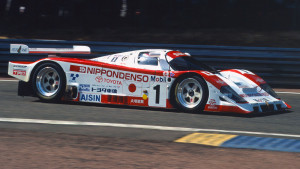
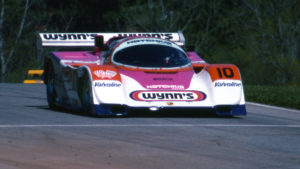
I can’t seem to find the few pictures my father’s friend took of me working on the Spice-Pontiac V8 IMSA GTP car back in 1990, so these lone shots of Racecraft International GTP Light’s Spice-Pontiac 4cyl cars will have to do. (If anyone has pics of the 1990 Racecraft GTP car, please email me!)

IMSA had been my favorite sportscar series for many years, and when the opportunity arose to join my then boss Bob Lesnett on the Racecraft team as a mechanic, I jumped at the chance to get my hands on my beloved GTP beasts. History will tell you that of the more impressive GTP teams on the IMSA radar, Racecraft International was cloaked in stealth bomber technology.
It wasn’t a team to be feared (unless you were lapping one of the barely capable rental drivers), yet for a pup like myself making his own debut in big time pro racing, it was a relatively safe environment to learn and grow my own skills. If anything, I was relieved to find that the past four years spent learning in the pro racing feeder series of Super Vee, the ACRL Sports 2000, FF2000, and Formula Atlantic had primed me to ease into joining a GTP team with few concerns.
Dealing with some of the paying drivers proved to be a major education for me; George Sutcliffe, a Barber Saab standout, soon learned that the skills that pushed him forward in Barber Saab were insufficient to bring anything like the same form in IMSA GTP. I recall being quite frustrated after he radioed in in the middle of a practice session, yelling the gearbox had packed up and wouldn’t shift into most of the gears. He said he’d have to coast in because the transmission was broken.
We met him at the top of pitlane, pushed the Spice back to the trailer, and tried to rip the ‘box open and get it fixed in time to get back out before the session ended. This was in the days before data acquisition was prevalent in all forms of pro racing, or for any of the privateer teams like Racecraft Int’l–we considered ourselves lucky to have a Stack “Tachtale” gauge that could recall peak RPM!
Without any data to rely on, it was common to rely on the driver for analysis and feedback from his time behind the wheel–that was the norm.
After opening the heavy, seemingly white-hot gearbox, we found everything to be intact, all the sift forks to be in place, and no bits of metal stuck to the internal magnet as we’d expected to find. Vexed and in pain from hands that were searing from everyone jumping in to collectively open the gearbox, I can still see the expression on everybody’s face when Sutcliffe wandered back from the bathroom to see what we were doing, and said “why’d you do all that? I just meant I had a hard time getting it into gear.” Responding to both his panic and conviction about the ‘box, we’d jumped on fixing it immediately. From then on, Sutcliffe’s opinions on the car were largely disregarded.
The English chief mechanic mumbled under his breath that he thought he might be able to kill Sutcliffe and get the murder charges thrown out on an insanity plea once the jury heard him re-tell the “broken gearbox” story. I seem to remember the rest of the crew offering to help him if he wanted a hand carrying out his plans…

Despite Sutcliffe, the rest of the team was a joy to work with–maybe not the best in their field, but at 19, I was by no means a star player yet myself. I dreamt of changing a tire during pitstops, or something equally as glamorous, but being the rookie, I was entrusted to an aerosol can of glass cleaner, a paper towel, and the highly critical task of making sure the windshield would pass for vaguely clean. Before I jumped back across the pit wall, I also cleaned debris from the front radiator inlet and helped to pull a front tire over the wall.
These were trivial jobs, but like any good apprenticeship, it was necessary for me to master the basics before being entrusted with anything more the following year. Racecraft was out of IMSA before the next season even started, and I’d moved onto more Toyota Atlantics with Bob Lesnett, and a championship in the 1991 ACRL Sports 2000 series with Cameron-McGee Motorsports.
The Sports 2000’s were just smaller open-topped prototypes, so it wasn’t too much of a letdown for me.
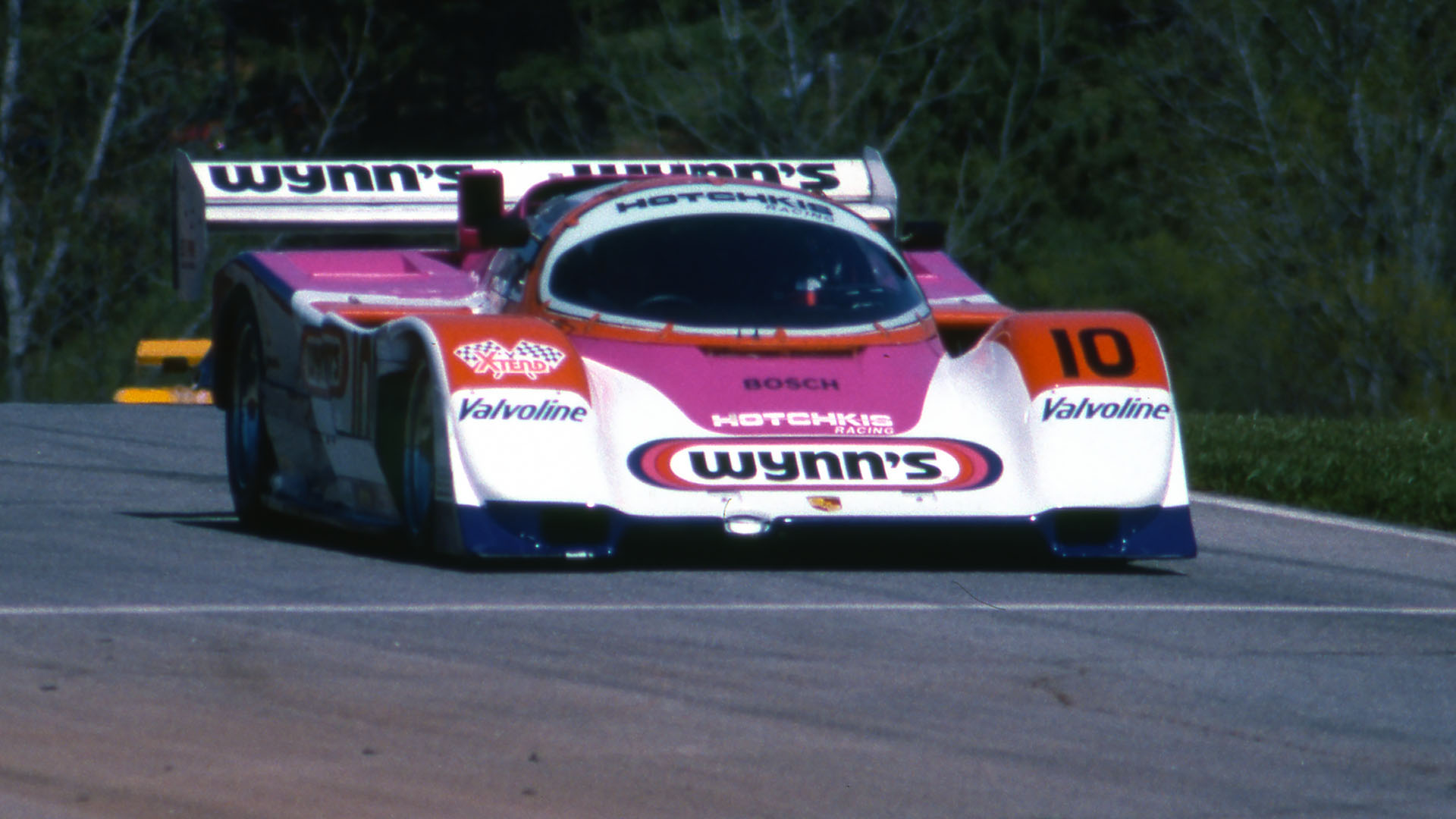
My IMSA GTP fortunes were limited to 1990, yet serve as one of the most prized eras of fulfillment and joy in my career. Wiping down the windshield of a Spice-Pontiac GTP car was about as minimal a duty as one could be given during a race, but between you and I, I’d keep one eye fixed on the windshield, and the other eye fixed on pitlane to capture the Nissan, Jaguar, Toyota, and Porsche GTP cars zooming less than two feet from my backside at triple-digit speeds. I’d have paid any price for those experienced if I’d been asked to.
Those images, sounds, and the raw excitement of standing on pitlane with the cars and hero’s of prototype lore screaming past me will never be lost.
Bloodlines of Passion and Speed
I’m especially proud to have followed in my father’s footsteps. As an amateur and eventual semi-pro driver, my dad drove some incredible cars to many wins. Before his days as a driver, he was introduced to racing as a mechanic. His passion for cars was born from his youth spent in Arkansas–with little to do, terrorizing the dirt road surrounding Lee County near his birthplace of Marianna was the preferred form of mischief.
After leaving Marianna for Chicago, and four years spent in the Army, he returned to Chicago and found work in construction in the summer, and working on cars indoor during the harsh Midwest winters. From his growing skills fixing cars, the hot road racing scene was a natural attraction for him. It wasn’t long before he was working for the famous “Foreign Car Hospital,” and helping with their own racing efforts on the weekends.
The photo below is of my dad helping a customer to setup his Lotus Formula Junior (I know my Lotuses fairly well, but I must admit that the crumples and fading have me only guessing at the model and class—drop me a note if you know what it actually is) at Milwaukee in the early ’60’s. How cool is that!

I do take great pride in the fact that I’m carrying on my father’s passion, his name, and have indeed made a long career out of the sport that he only worked in until he was 23 or 24. He was always involved afterwards, but focused on owning and running a variety of European car garages. He raced all throughout my life, and despite a hiatus for most of the ’80’s, he went back through driver’s school with me when I entered for the first time in a Tiga Formula Ford we bought in a crate and built together. Again, how cool was that!

He was always a Lotus man, and loved anything he could find and build to an inch of its limits. Using the connections grown from his “Pruett’s Olde English Garage” shop in Burlingame, CA, my dad was always pressing customers and acquaintances for the whereabouts of a Lotus Cortina, Louts 23, or any British oddity that needed a lot of love before being track worthy.

With the home-built Lotus 23B seen below, my father and his partner Rick Sturiza shared driving the 23B in the San Francisco SCCA region. The two were in a constant battle with the newer, more powerful Lotuses of Tom Foster and Chuck Billington–I think my eternal support for an underdog came from watching my dad and Rick taking on and often beating the filthy rich Foster and Billington team. What a brilliant way to let a young child (I was 6 or 7 at the time) grow up!

As I tell most people that ask how I got into racing, one of my first memories on this planet happens to be of me at 3yrs old, sitting on the ground in the upper paddock at Sears Point (near the original Turn 2 bridge), helping my dad pick the bigger rocks that were stuck to the tires on his Lotus Cortina. Being involved, included, and in love with the sounds, smells, and images of racing from such a young age, it’s not a mistake that it has served as my most enduring passion.

I’ll continue to add more pictures of my dad as I have time, but until then, know that regardless of what I’ve accomplished in racing, my life as a motorsports professional was started by helping my dad at 3yrs old— my career is just a continuation of what Marshall Pruett Sr. started back in ’60’s.
SPEED TC Spotlight: James Clay, ”No, More Mr. Nice Guy!”August 12
My latest feature for SPEEDtv.com on SPEED Touring Car racer and owner of BimmerWorld, James Clay.
http://www.speedtv.com/articles/auto/scca/30792/
IRL 2001: Curtain Call on a 16 Year CareerJune 3
The 2000 season had been a tough one on me. With the onset of the 2001 season, a call from my old friend Sam Schmidt to join his new Sam Schmidt Motorsports (SSM) IRL team seemed like a fitting end to my tenure as a full-time racing professional. I’d been on the road in one [...]
Driver Coaching: Andy Pilgrim & Max+MaxJune 2
I had one of the more enjoyable times last year while working with the Cadillac World Challenge GT drivers. Andy Pilgrim, Max Angelelli, and Max Papis are all big names and wildly successful, but they are also hungry enough to know that no matter how many trophies or championships they might have amassed, the [...]
Team Management: Building a new DP team in 2005June 1
One of the greatest challenges I faced in 2005 was helping to establish the new CB Motorsports Daytona Prototype team. In addition to engineering the car, the hardest aspect of the project was to groom and teach Bingham’s business manager how to run a racing team. Building the team infrastructure in under a month—defining crew [...]
Indy Pro Series: 2005 Indy Freedom 100May 29
I’d known Taylor Fletcher, owner/driver of the Bullet Team Indy Pro Series (IPS) effort through former Indycar friends and co-workers. They’d always mentioned him as an extremely good guy, if not always scraping together his last few dollars to go racing. On an amateur racing level, saving loose change in a jar to go racing [...]
IRL 2000: A Hard YearMay 27
I’m nothing if not straight forward about my experiences. As much as it might be tempting to paint a false coat of success and splendor on things, it doesn’t change reality.
For this little ditty, I can say that my time spent with TeamXtreme in the IRL was littered with the odd highlight, a bunch [...]
How to Change Your OilApril 28
I’m proud to announce that I had my first contribution to a major book published recently–my chapter “How to Change Your Oil by Memo Gidley, as told to Marshall Pruett” is featured in the book “50 Things Every Guy Should Know How To Do : Celebrity and Expert Advice on Living Large ” as [...]
SPEED GT Interview by Trackbytes.comApril 16
Todd Benne of Trackbytes interviewed Gary Sheehan and I right after the Long Beach Grand Prix this year—the interview can be found here
An Inauspicious Introduction to IMSA at 19 Years Old.March 18
I can’t seem to find the few pictures my father’s friend took of me working on the Spice-Pontiac V8 IMSA GTP car back in 1990, so these lone shots of Racecraft International GTP Light’s Spice-Pontiac 4cyl cars will have to do. (If anyone has pics of the 1990 Racecraft GTP car, please email me!)
IMSA had [...]
Bloodlines of Passion and SpeedMarch 17
I’m especially proud to have followed in my father’s footsteps. As an amateur and eventual semi-pro driver, my dad drove some incredible cars to many wins. Before his days as a driver, he was introduced to racing as a mechanic. His passion for cars was born from his youth spent in Arkansas–with little to do, [...]
Random Photo
Warning: Compilation failed: characters with values > 255 are not yet supported in classes at offset 16 in /data/webroot/www.marshallpruett.com/html/wp-includes/shortcodes.php on line 213
Click for a bigger look and to browse thousands of photos in our galleries!
Latest Photos
My latest feature for SPEEDtv.com on SPEED Touring Car racer and owner of BimmerWorld, James Clay. http://www.speedtv.com/articles/auto/scca/30792/ Read More →
August 12See all photo galleries >>
Latest Videos
My latest feature for SPEEDtv.com on SPEED Touring Car racer and owner of BimmerWorld, James Clay. http://www.speedtv.com/articles/auto/scca/30792/ Read More →
Todd Benne of Trackbytes interviewed Gary Sheehan and I right after the Long Beach Grand Prix this year—the interview can be found here Read More →